5 min. reading time

Lucia Gjeltema
Head of Data Science

In youth football, the instep shot is one of the game’s fundamental techniques. Yet despite its importance, there is often little opportunity to develop it systematically during regular team training. Training sessions are shaped by constantly changing game situations, limited repetitions and a strong focus on collective play. As a result, individual technical development often takes a back seat.
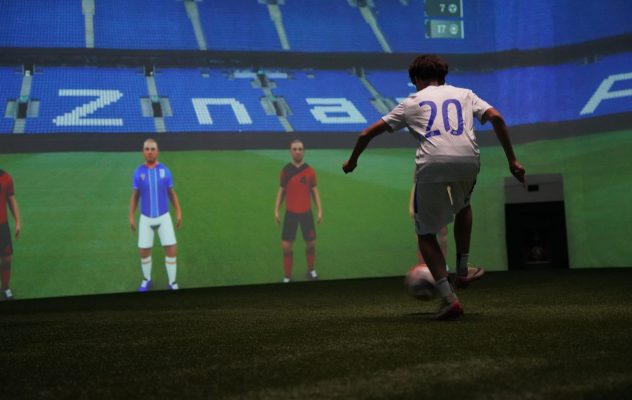
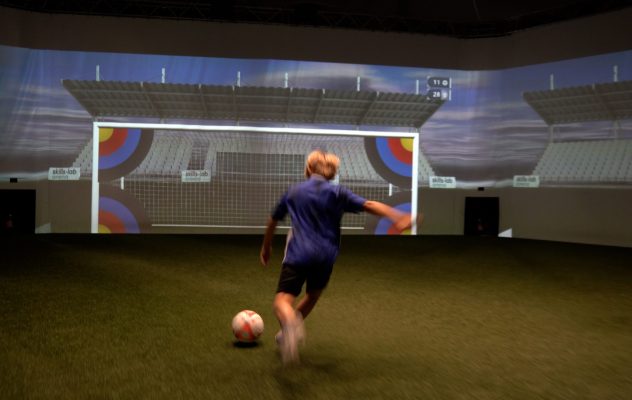
To better understand how targeted technical training can influence this skill, we analyzed a group of ten youth players within the skills.lab Academy. Over several weeks, they practiced the instep shot regularly in the skills.lab Arena under standardized conditions, with high repetition numbers and objective measurement of every attempt.
The result: By the end of the training period, their shots landed 33 percent closer to the target on average than at the beginning.
The analysis was carried out as part of the skills.lab Academy, a development program for players aged 10 to 12. Alongside their regular club training, participants completed individual training sessions in the skills.lab Arena.
The focus was placed on a technique that is frequently required during matches but rarely trained in isolation. Before the exercises began, players received specific instruction on ball contact, foot position, body posture and movement execution. These technical elements were then reinforced through repeated practice over several weeks.
This combination of consistent conditions and high repetition numbers created an environment where technical movement patterns could be developed systematically and monitored objectively. Every shot was recorded and evaluated by measuring the distance between the ball and the predefined target.
To evaluate development over time, all ten players completed the same exercise sequence twice: once in February and again in May and June.
Between these two assessment sessions, players trained in the Arena between six and nine times. During this period, each player completed between 100 and 150 instep shots, spread across approximately 15 to 30 minutes of finishing exercises.
This created an objective comparison of their technical development over several weeks of additional training.
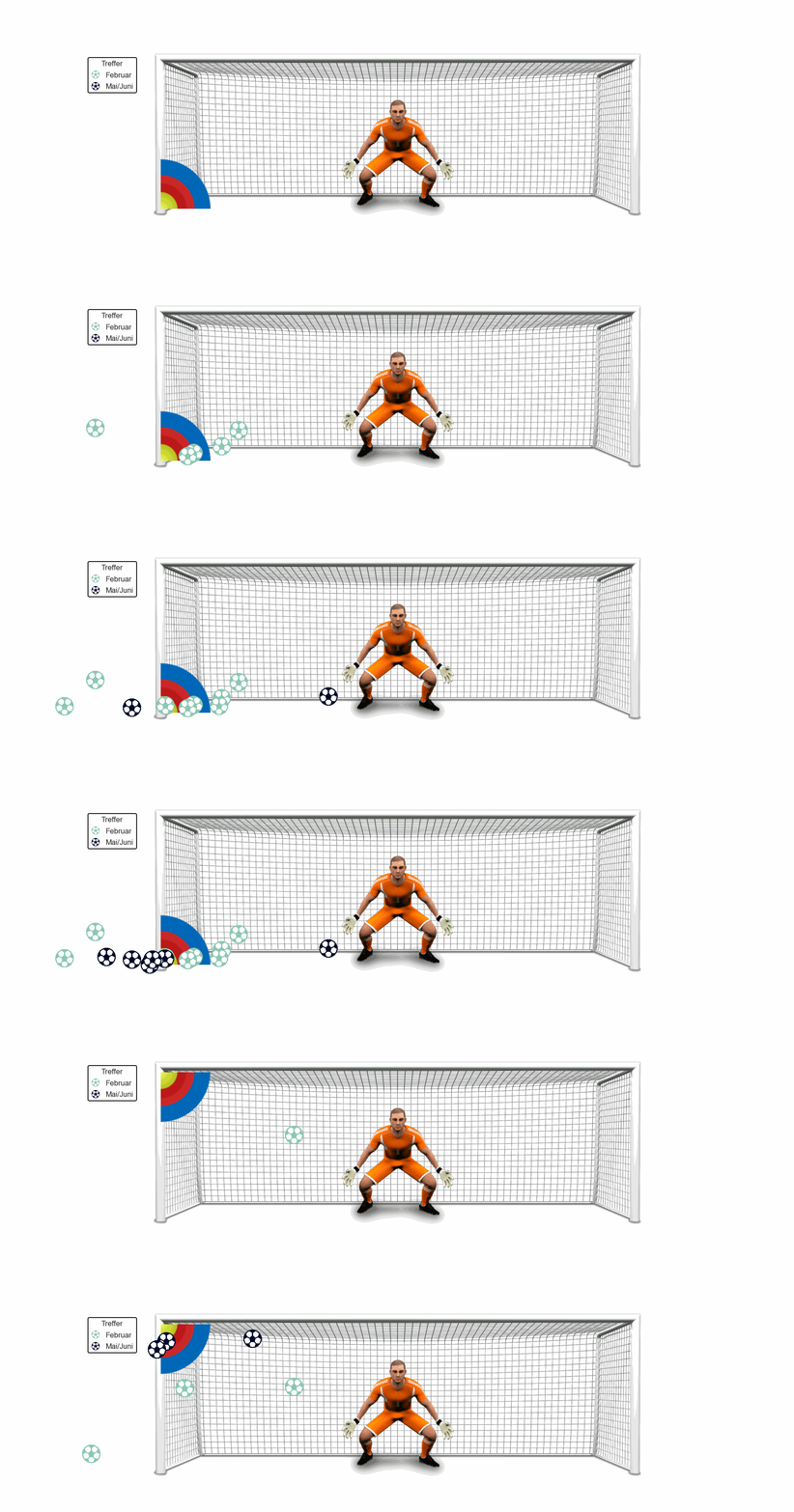
During the second assessment, nine out of ten players finished more accurately than in the initial test.
Performance was measured by calculating the average distance between the ball and the target. The smaller the distance, the more accurate the shot.
In February, the players’ average deviation ranged from 102 to 174 cm. By May and June, this range had improved to 41 to 127 cm.
Two players showed particularly strong improvements. One reduced the average deviation from 165 cm to 71 cm, while another improved from 125 cm to just 41 cm.
Across the entire group, shot accuracy improved by an average of 33 percent over the course of the training period.
The results suggest that technically demanding skills such as the instep shot benefit from consistent repetition, particularly when training takes place under standardized and repeatable conditions.
As Matthias Fischer, Sports Scientist and Head Coach at skills.lab, explains, “the instep shot is much more than a finishing technique. Players learn proper ball contact, foot position, movement execution and develop shooting power at the same time. Between the ages of 10 and 12, these are essential foundations for long-term football development.”
Team training remains the foundation of every young player’s development. However, additional individual training can make a valuable contribution when the goal is to refine specific technical skills. High repetition numbers, consistent conditions and objective performance measurement make technical progress visible, giving coaches an additional tool to support individual player development.