
Andreas Terler
Editor
When thousands of football fans gather in one place, creating attention is rarely the problem.
Big screens, live matches, music, food trucks and sponsor activations are now standard at almost every major tournament. Visitors arrive. They watch. They move on.
Yet some fan zones develop a completely different atmosphere. People don’t just pass through. They stay. They participate. They become part of the experience. So what makes the difference?
One observation has become increasingly clear across football events in recent years: Fans no longer want to simply consume football. They want to experience it themselves.
Watching the match is only one part of the day. Before kickoff, during halftime or after the final whistle, visitors are looking for something that keeps them engaged. The most successful fan zones don’t just entertain, they invite participation.
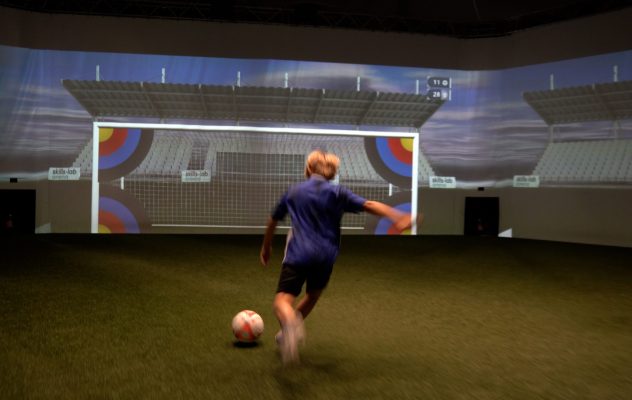
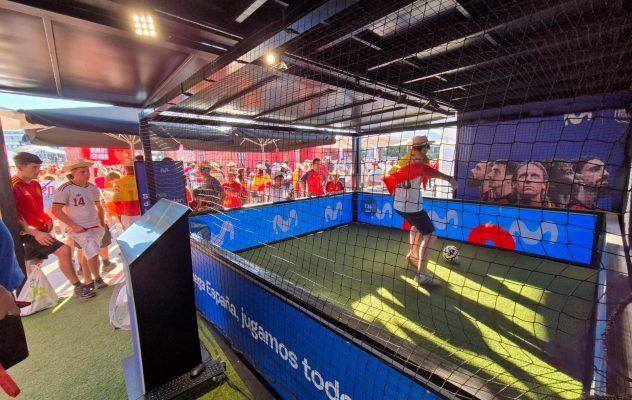
At UEFA EURO 2024™, this became clearly visible. As part of the Hisense™ brand spaces in Munich and Berlin, two skills.lab Cubes transformed traditional sponsor activations into interactive football challenges. Instead of standing in front of a branded display, visitors stepped inside the Cube, registered within seconds and immediately became part of a live competition.
The format itself was deliberately simple. Every participant completed a 60-second challenge followed by a short changeover, allowing a continuous flow of players throughout the day. Live leaderboards displayed the highest scores, while prizes added an additional incentive to return and compete again. The result wasn’t just a steady stream of participants.
Over the course of the tournament:
– 17,015 active players took part across both locations.
– An average of 576 participants per day entered the Cubes.
– The systems were actively in use for more than 7 hours every day.
More interesting than the numbers themselves was the behavior behind them.
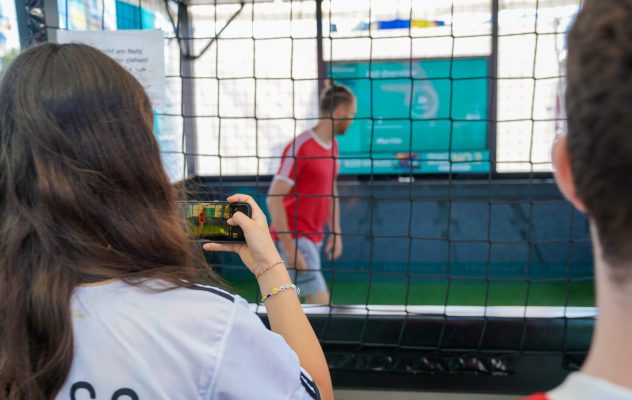
Visitors didn’t simply complete one challenge and leave. They watched others play, compared scores, returned for another attempt and challenged their friends. Small crowds formed naturally around the Cube, with spectators cheering, filming challenges and sharing the experience on social media.
Participation spread beyond the player. Every challenge attracted new spectators, new participants and new content, extending the experience far beyond the fan zone itself. The activation became something people wanted to be part of.
For brands, this changes the role of a fan zone. Traditional activations focus on visibility. The objective is to make people notice a brand. Interactive experiences go one step further. They create moments where visitors actively engage with the brand rather than simply seeing it.
At UEFA EURO 2024™, Hisense™ combined competitions, leaderboards and branded gameplay into one connected experience. Every challenge reinforced the brand while simultaneously generating meaningful interaction and structured participant data. The brand wasn’t standing next to the experience, it became part of the experience.
As the FIFA World Cup 2026 once again brings millions of supporters together around the game, the same question is being asked by brands and organizers around the world: How do you create a fan experience that people remember?
One answer can currently be seen in Madrid, where the Spanish Football Federation (RFEF) and Movistar are once again using a skills.lab Cube as part of their official World Cup fan zone. Rather than simply watching football, visitors are invited to step onto the pitch themselves, compete in interactive challenges and win exclusive prizes.
The technology may stay the same. But the principle behind it is becoming increasingly relevant: The most successful fan zones aren’t just places where football is watched. They’re places where football is experienced.