
Lucia Gjeltema
Head of Data Science
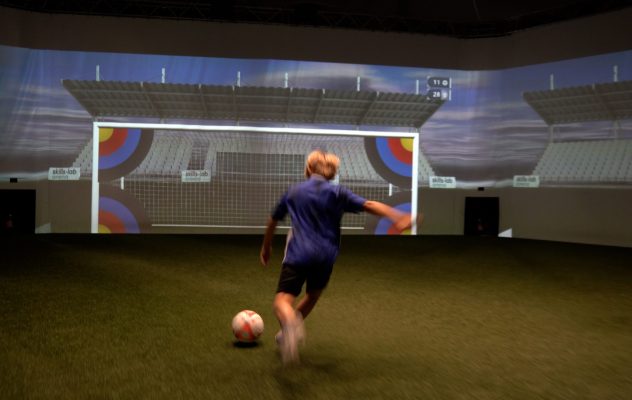
Team training on the pitch, small-group sessions, or individual training in the skills.lab Arena: The number of ball touches a player gets in 60 minutes can vary significantly depending on the training format.
Matthias Fischer, sports scientist, youth coach, and Head Coach at skills.lab, wanted to find out just how substantial these differences are. As part of his ongoing coaching education, he analyzed training sessions involving a youth team in elite football development and compared the number of ball touches recorded by individual players with those achieved during training in the skills.lab Arena, distinguishing between touches with the dominant and non-dominant foot.
The aim was not to achieve the highest possible number of ball touches, but to understand how different training formats influence the number of technical repetitions available to each player.
Even within team training, the number of ball touches an individual player gets can vary considerably. Key factors include group size and the types of drills and game formats used.
As part of its Training Philosophy Germany initiative, the German Football Association (DFB) has also examined how different game formats affect the number of ball touches. (1) Smaller-sided games significantly increase the number of touches per player. While the DFB recorded around 50 touches per player in 7v7 games, that number rose to approximately 200 in 3v3 games over the same period.
Fischer observed similar differences in the team training sessions he analyzed. Depending on the session structure, players recorded between 175 and 247 ball touches per 60 minutes. For example, a session combining a passing circuit, 1v1 situations, and 3v3 games with supporting players resulted in more touches than a session involving first-touch control, rondos, and finishing.
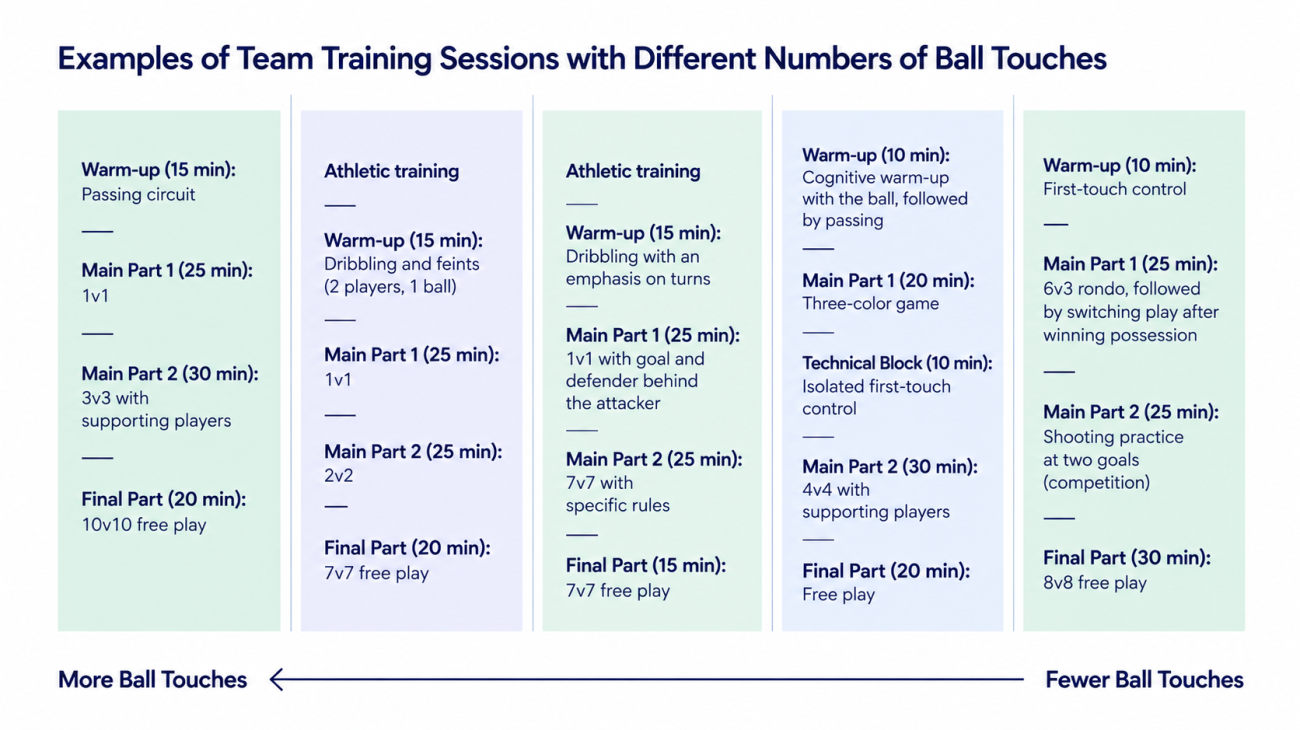
The findings show how much coaches can influence the number of repetitions simply through the way they organize team training. Depending on group size and the exercises selected, individual players can get significantly different numbers of touches.
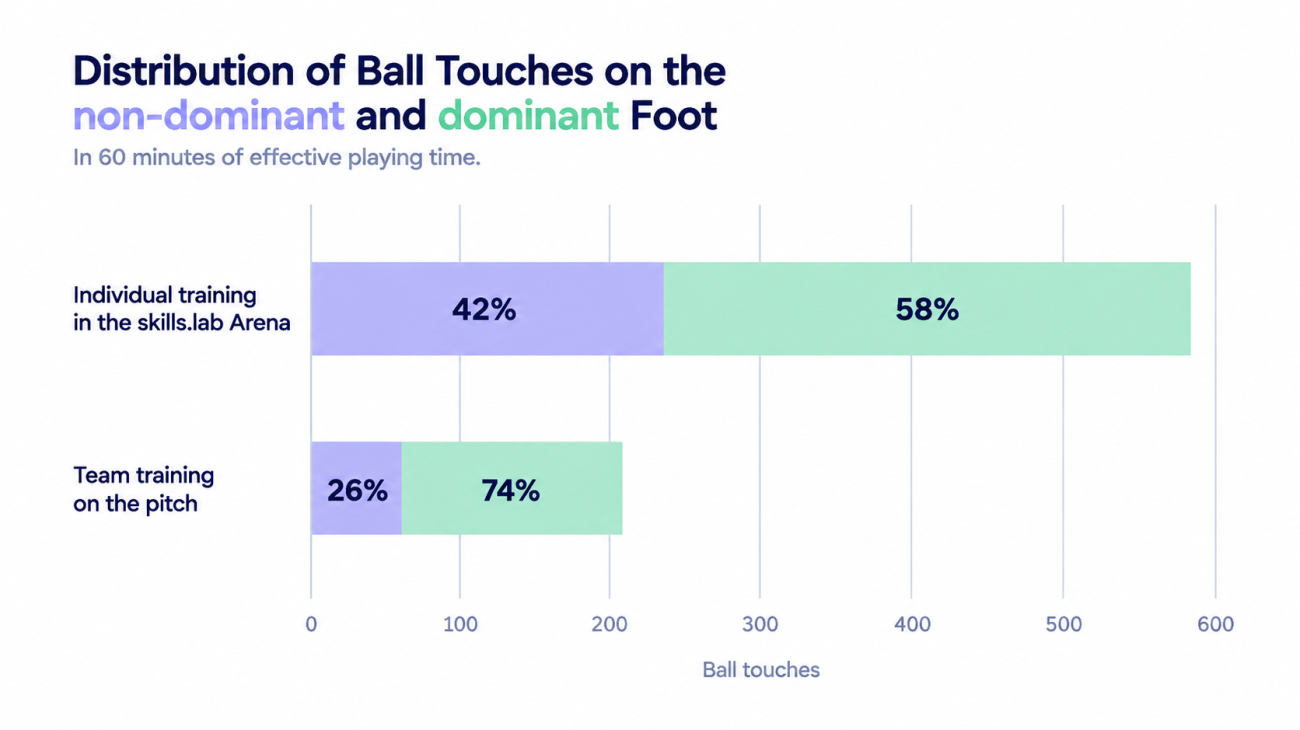
The differences become even more pronounced when comparing team training, small-group sessions, and individual training. In team training, a player averaged 211 ball touches per 60 minutes. In the skills.lab Arena, that number rose to 474 when training in a group of three and 580 during individual sessions.
It is hardly surprising that players get more touches when fewer players train together. For targeted technical training, however, the scale of the difference matters. In small groups and especially in individual sessions, each player has significantly more opportunities to repeat specific technical movements within the same amount of time.
The analysis not only examined how often players touched the ball, but also which foot they used.
Individual training resulted in approximately 2.5 times as many ball touches overall, with a higher proportion involving the non-dominant foot. In team training, an average of 26% of touches were made with the non-dominant foot, compared to 42% during individual training. In absolute terms, that means 55 versus 243 touches with the non-dominant foot over 60 minutes.
„When the focus is on technical development, coaches need to create an environment that allows for a high number of repetitions while ensuring that these repetitions are performed with the necessary technical quality. When tactical objectives take priority, we have to accept that a session may involve fewer ball touches. We can compensate for this within the weekly training plan by incorporating additional technical work or isolated drills into other sessions. What matters is that individual sessions are not viewed in isolation, but in the context of the entire training week.
“
Matthias Fischer
Sports Scientist, Youth Coach, and Head Coach at skills.lab
When the focus is specifically on technical development, the skills.lab Arena can complement team training by providing additional repetitions in areas where individual players may otherwise have limited opportunities. Exercises can target specific technical skills or the non-dominant foot, allowing players to repeat particular movements many times.
However, Fischer emphasizes that the objective is not simply to accumulate as many touches as possible: „”High repetition counts are important, but they are not an end in themselves. What matters is the combination of quantity, quality, decision-making under pressure, and game relevance. This balance should form the foundation for planning effective training sessions that support player development. I am convinced that combining targeted technical development, high-quality repetitions, game-realistic situations, and sufficient decision-making and competitive pressure contributes to the long-term development of young talents and gives them a stronger foundation for their future in football.”
—
(1) https://www.dfb-akademie.de/trainingsphilosophie-deutschland/-/id-11011532/